What Lake Austin Waterfront Owners Should Do During the Fall Drawdown
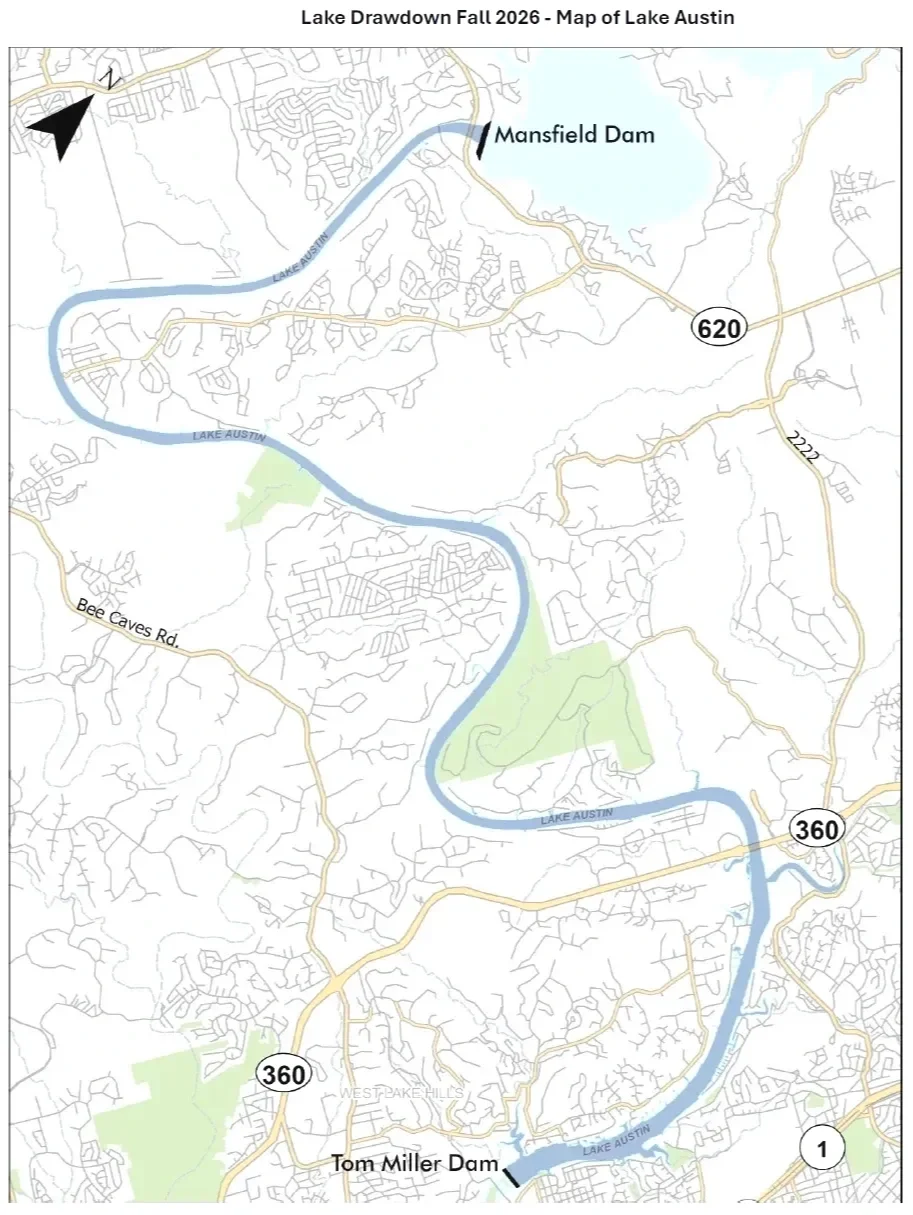
The City of Austin and LCRA are dropping Lake Austin about 10 feet this fall. If you own shoreline between Mansfield Dam and Tom Miller Dam, that means a short window where the lakebed in front of your property, in many stretches thick with hydrilla, is exposed and workable. Here's what's happening, what you can get done, and what requires a permit before you touch a shovel.
The Timeline
Oct. 12, 2026: Drawdown begins. The lake drops no more than about a foot a day.
Roughly 3 weeks later: Lake reaches its target range of 481.8 to 482.8 feet above mean sea level, depending on conditions.
Nov. 24, 2026: Refill starts, up to 2 feet a day.
Nov. 30, 2026: Lake expected back in normal operating range.
Strip out travel time to reach full drawdown and refill, and the real usable window for shoreline work is closer to three to four weeks in November. That's not a lot of runway for a project you've been putting off.
What You Can Get Done
With the lakebed exposed, this is the time to:
Repair or rebuild shoreline structures, docks, and bulkheads
Dredge boat slips that have silted in
Remove accumulated debris and sediment along the shoreline
Manage nuisance vegetation that's normally underwater
Regrade or stabilize an eroding bank while you can actually get equipment to it
Most of this is work you can't do, or can't do well, when the lake is at normal pool. Once refill starts Nov. 24, the window closes.
The Hydrilla Problem
If your property sits anywhere between Mansfield Dam and the Lake Austin Spa area, there's a good chance your exposed shoreline this fall is covered in hydrilla. The City's own Watershed Protection survey describes this upper stretch of the lake as dense with the invasive plant from bank to bank. Once the water drops, dead and stranded hydrilla along your shoreline is fair game to clear out during the drawdown.
Two things worth knowing before you do:
Clearing your shoreline isn't the same as fixing the lake's hydrilla problem. The City's own data shows drawdowns haven't historically been effective at controlling hydrilla lake-wide, and can even work against it by knocking back the competing vegetation that would otherwise crowd it out. That's a longer, lake-wide effort the City runs separately through grass carp stocking. What clearing your shoreline does is get this season's dead growth off your property before it rots along your bank and becomes an even bigger mess.
Dispose of it properly, don't just cut and leave it. Hydrilla spreads by fragmentation, cut pieces left at the waterline can re-root once the lake refills, undoing the work and adding to next year's problem. Texas can also fine up to $2,000 per plant for putting material back into the water. Cleared material needs to be hauled fully offsite.
What Needs a Permit
Not everything on that list is a walk up and dig situation. The City of Austin requires a permit for:
Construction of a new boat dock
Repairs to existing boat docks and bulkheads
Removal of sediment from the lakebed
Some work may also require a Texas Parks and Wildlife Department permit. Austin Development Services is putting together a dedicated Site Plan Exemption application specifically for minor dock and bulkhead repairs during this drawdown, meant to speed up approval for smaller jobs. It's expected in the coming weeks.
Where to check current permitting requirements:
The City is also hosting a community open house on Wed., Sept. 9, 2026, from 6 to 8 p.m., at the Permitting and Development Center (6310 Wilhelmina Delco Drive, Meeting Room 1407), to walk residents through the drawdown and permitting process.
What To Do Now, Before
October 12
Walk your shoreline and make a list. Identify what actually needs attention: a failing bulkhead, a silted-in slip, an eroding bank, debris that's built up over the years.
Sort your list by permit requirement. Debris and vegetation removal generally move faster. Dock, bulkhead, and sediment work need a permit in hand before you start.
Start the permit conversation early. With every waterfront owner on the same three-week clock, City review capacity will be a bottleneck. Don't wait until November to find out what's required.
Book equipment and a contractor now. Access to the lakebed will be tight to schedule once the drawdown starts. Contractors who can actually get equipment onto soft, freshly exposed lakebed without getting stuck will book up fast.
Don't leave equipment or tools in the lakebed overnight. The City has flagged that flooding or power grid needs could shorten or cancel the drawdown with limited notice.
A Word on the Ground Itself
Freshly exposed lakebed sediment isn't the same as a dry construction site. It's soft, often saturated well into the drawdown, and unforgiving on equipment that's too heavy for it. Whoever you bring in should be running gear sized for wet ground, not just whatever they had available.
Heritage Land & Habitat handles shoreline restoration, erosion control, sediment removal, and bank regrading across the Austin area, including Lake Austin waterfront properties. If you're planning work for this drawdown window, reach out early, the schedule is the constraint, not the work itself.
Jake Orlich | Heritage Land & Habitat jake@heritagelandhabitat.com | 214-733-1344 | heritagelandhabitat.com